
Introduction
The Future Of AI In Marketing is transforming the way businesses attract, engage, and retain customers. What once seemed like science fiction has become an everyday reality, with artificial intelligence helping brands deliver personalized experiences, automate repetitive tasks, and make smarter decisions based on data. Whether you’re a startup founder, digital marketer, or business owner, understanding the Future Of AI In Marketing is no longer optional—it’s essential.
Future Of AI In Marketing
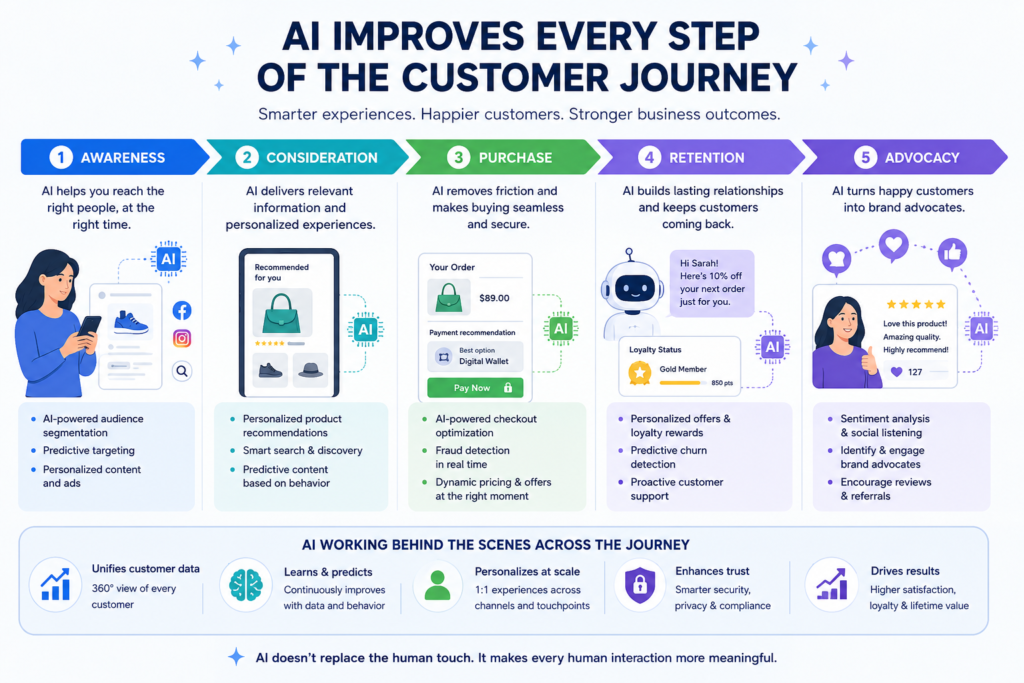
Why the Future Of AI In Marketing Matters More Than Ever
The Future Of AI In Marketing isn’t simply about replacing human effort with machines. Instead, it’s about empowering marketers to make faster, more informed decisions while creating meaningful customer relationships.
According to recent industry research, companies using AI-driven marketing strategies often experience improved customer engagement, higher conversion rates, and more efficient campaign management. While AI can process millions of data points in seconds, human marketers remain essential for creativity, empathy, storytelling, and ethical decision-making. This combination of technology and human expertise is what makes AI so powerful.
Key Benefits :
Better customer insights
Faster campaign optimization
Personalized user experiences
Improved return on investment (ROI)
Reduced manual workload
Smarter decision-making
How the Future Of AI In Marketing Is Revolutionizing Customer Experience
The Future Of AI In Marketing is fundamentally changing how brands communicate with their audiences. Modern consumers expect brands to understand their preferences, anticipate their needs, and provide relevant solutions proactively.
Personalized Marketing at Scale
Personalization has moved beyond using a customer’s first name in an email. AI analyzes browsing history, purchase behavior, demographics, and engagement patterns to create highly relevant recommendations.
For example, streaming platforms recommend movies based on your viewing habits, while online retailers suggest products that match your interests. This personalized approach enhances customer satisfaction while driving higher sales and business growth.
AI-Powered Chatbots
Modern chatbots provide instant customer support around the clock.Rather than waiting hours for an email reply, customers receive instant responses, creating a faster, more convenient experience while building trust in the brand.
Predictive Analytics
AI doesn’t just analyze the past—it predicts the future.
Businesses can forecast:
Customer behavior
Product demand
Campaign performance
Customer churn
Seasonal buying trends
This allows marketers to make proactive decisions instead of reacting after problems occur.
Hyper-Personalization
Instead of grouping customers into broad categories, AI now creates individualized experiences for each user.Imagine visiting an online store where product recommendations, homepage banners, and email offers are uniquely tailored to your preferences. That’s the future.
AI Content Assistance
AI tools help marketers generate:
Blog outlines
Email campaigns
Product descriptions
Social media captions
SEO recommendations
However, experienced marketers understand that AI-generated content should always be reviewed, edited, and enhanced with real expertise and original insights.
Voice Search Optimization
As voice assistants become more popular, search behavior continues to change.
Instead of typing:
“best smartphone”
People ask:
“What’s the best smartphone under $500 for photography?”
Businesses that optimize for conversational searches will gain a significant advantage.
Visual Search
Customers increasingly search using images instead of text.
Retail, fashion, home décor, and e-commerce businesses are already benefiting from AI-powered visual recognition technology.
Challenges in the Future Of AI In Marketing
Despite its advantages, the Future Of AI In Marketing also presents important challenges.
Data Privacy
Customers are increasingly aware of how businesses collect and use their personal information.
Companies must prioritize:
Transparency
Consent
Secure data storage
Regulatory compliance
Building trust matters just as much as collecting data.
Maintaining Authenticity
One common mistake businesses make is relying too heavily on automation.
Customers continue to value authentic storytelling, sincere communication, and genuine human emotion.
AI should enhance creativity—not replace it.
Poor Data Quality
Artificial intelligence relies on accurate information.
Incomplete or outdated customer data can produce misleading recommendations and ineffective campaigns
As marketers often say:
“Quality data produces quality decisions.”
Best Practices to Prepare for the Future Of AI In Marketing
Preparing for the Future Of AI In Marketing doesn’t require massive investments overnight. Businesses can start small and gradually expand their AI capabilities.
Invest in Quality Data
Clean, organized, and accurate customer data forms the foundation of successful AI implementation.
Train Your Marketing Team
Technology evolves quickly.
Continuous learning ensures marketers understand both the opportunities and limitations of AI.
Combine Human Creativity with AI
The most successful campaigns blend:
Human storytelling
AI-powered insights
Creative strategy
Customer empathy
This balanced approach creates memorable experiences while improving efficiency.
Measure and Improve
Successful marketers continuously monitor:
Conversion rates
Customer engagement
Bounce rates
Click-through rates
ROI
AI provides valuable insights, but regular testing helps businesses achieve long-term success.
A Real-Life Example
A regional travel agency struggled to compete with larger online booking platforms. Instead of increasing its advertising budget, the company introduced AI-powered email personalization based on customers’ previous trips and travel preferences. Within six months, repeat bookings increased noticeably because customers received relevant offers at the right time. The technology supported the marketing team—it didn’t replace their expertise.
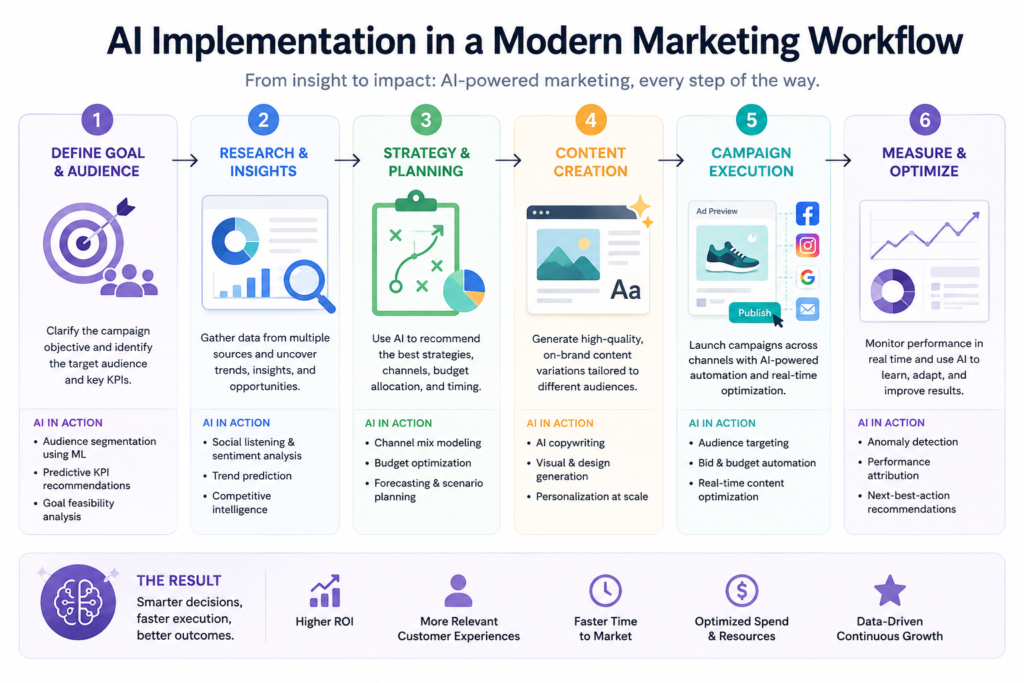
While AI can assist with research and drafting, successful marketing still depends on genuine human experience
Businesses should:
Publish original insights.
Share real customer case studies.
Cite trustworthy sources.
Regularly update content.
Demonstrate industry expertise.
The future of AI in marketing belongs to organizations that blend technological innovation with authentic, experience-driven content that truly benefits users.
Conclusion
The Future Of AI In Marketing is creating exciting opportunities for businesses of every size. From personalized customer experiences and predictive analytics to smarter automation and improved decision-making, AI is redefining how modern marketing works. However, technology alone isn’t enough. Lasting success comes from combining AI with human creativity, ethical practices, and a deep understanding of customer needs. Businesses that embrace innovation while maintaining authenticity will be well-positioned to thrive in the Future Of AI In Marketing and build stronger relationships with their audiences for years to come.
Book Your seat
Ready to prepare your business for the future? Start by integrating AI into one area of your marketing strategy—whether it’s email automation, customer segmentation, or content optimization. Continue learning, test new tools, and measure your results consistently. For more insights, explore our guides on Digital Marketing Strategies, SEO Best Practices, and Content Marketing Tips to stay ahead in the ever-evolving digital landscape.
Frequently Asked Questions (FAQs)
1. What is the Future Of AI In Marketing?
The Future Of AI In Marketing refers to the growing role of artificial intelligence in improving customer engagement, automating marketing tasks, analyzing data, and delivering personalized experiences.
2. How does AI improve marketing performance?
AI helps businesses analyze customer behavior, predict trends, personalize campaigns, automate repetitive tasks, and improve marketing ROI.
3. Will AI replace digital marketers?
No. AI supports marketers by automating routine work, but human creativity, strategic thinking, emotional intelligence, and ethical judgment remain irreplaceable.
4. Is AI marketing suitable for small businesses?
Yes. Affordable AI-powered tools allow small businesses to automate email marketing, enhance customer support, optimize advertising, and gain valuable customer insights.
5. How can businesses prepare for the Future Of AI In Marketing?
Businesses should invest in quality data, train employees, adopt AI gradually, maintain transparency, and combine AI insights with human expertise to create authentic customer experience